What to Wear for a Day Out of Seyðisfjörður
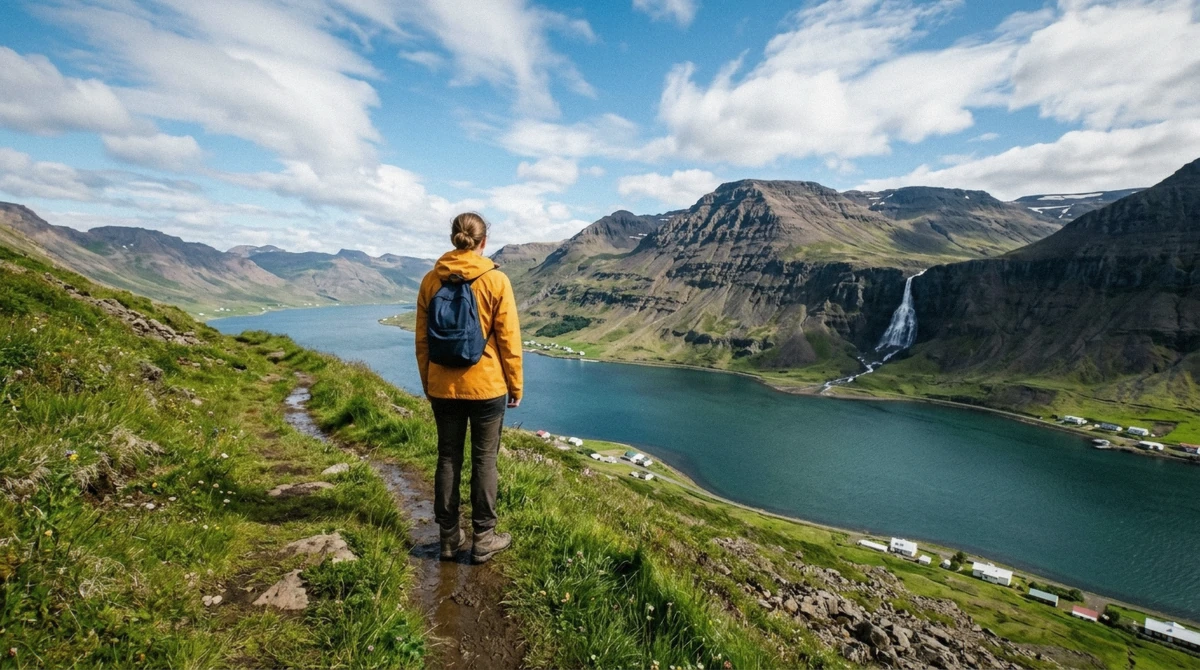
The short answer to what to wear in East Iceland is three layers with a waterproof on the outside, and the reason is in the rainfall. Seyðisfjörður takes over 1,650 mm a year, roughly twice what Reykjavík gets, and the mountains on both sides of the fjord make their own weather on top of that. July highs average 13°C. The visitors who have a bad day here are almost always the ones who dressed for the temperature rather than the wind and the wet.
Quick answer
Three layers, and one of them waterproof. A base layer, a fleece or light down mid-layer, and a genuinely waterproof shell with a hood, plus shoes with grip. July averages a high of 13°C in Seyðisfjörður and the town takes 1,650 mm of rain a year, so warmth without weatherproofing is useless here. If your trip includes the canyon hike, add waterproof trousers and proper boots; if it includes the geothermal pools, add a swimsuit and a towel, because neither is provided.
Key takeaways
- Waterproof shell with a hood, not a showerproof jacket. Rain here arrives sideways
- July average high is 13°C and January is 3°C, so a warm mid-layer is a summer item too
- Boots with grip for the east side of the canyon, where wet basalt is genuinely slippery
- Swimsuit and towel if your trip stops at the geothermal pools; hire costs 1,390 ISK each
- Binoculars for the puffin colony and the boat, which no operator hands out
- Nothing is sold at the stops, so water and food travel with you
The Weather You Are Dressing For
The numbers below come from the Icelandic Met Office record for Seyðisfjörður. They explain the packing list better than any advice can.
| Month | Average day high | Rainfall | What that feels like |
|---|---|---|---|
| January | 3.0°C | 211 mm | Wet, dark, wind off the fjord |
| April | 4.7°C | 94 mm | The driest stretch begins |
| May | 8.4°C | 67 mm | Cool and comparatively dry |
| June | 11.3°C | 56 mm | The best month for staying dry |
| July | 13.0°C | 57 mm | Warmest, still needs a jacket |
| August | 13.2°C | 95 mm | Warm and noticeably wetter |
| September | 10.0°C | 173 mm | Autumn arrives with the rain |
| October | 6.4°C | 214 mm | Wettest month of the year |
Two things fall out of that table. The warm months are also the wet months at either end of the season, and the temperature range across a whole year is about ten degrees. You are not packing for heat or for cold. You are packing for wind and water at around ten degrees, which is a narrower problem than most people expect and one that a good shell solves.
The wind is the part nobody plans for. Fjord walls funnel it, and on a clifftop at Hafnarhólmi or the rim at Stuðlagil, 13°C with wind and spray feels like five. Last verified: July 2026.
The Layers
Base layer
Wool or a synthetic. Cotton holds water against your skin, and on a day where you get wet at ten in the morning and stay out until four, that is the difference between mildly damp and cold for six hours.
One long-sleeved base layer is enough for a day trip. Two if you are staying and walking.
Mid-layer
A fleece or a light down jacket. This is the layer people leave behind in July and regret at the canyon, where the gorge sits in shade for part of the day and the wind comes down the valley.
Down is warmer for the weight and useless once wet, which is fine underneath a shell that works and a problem underneath one that does not.
Shell
The one item worth spending money on. A hooded waterproof with taped seams, long enough to cover your hips, sized to fit over the mid-layer. Anything described as water-resistant or showerproof will wet through in an hour here.
Waterproof trousers matter on the east-side canyon walk and on the boat. On a town day you can live without them.
Footwear
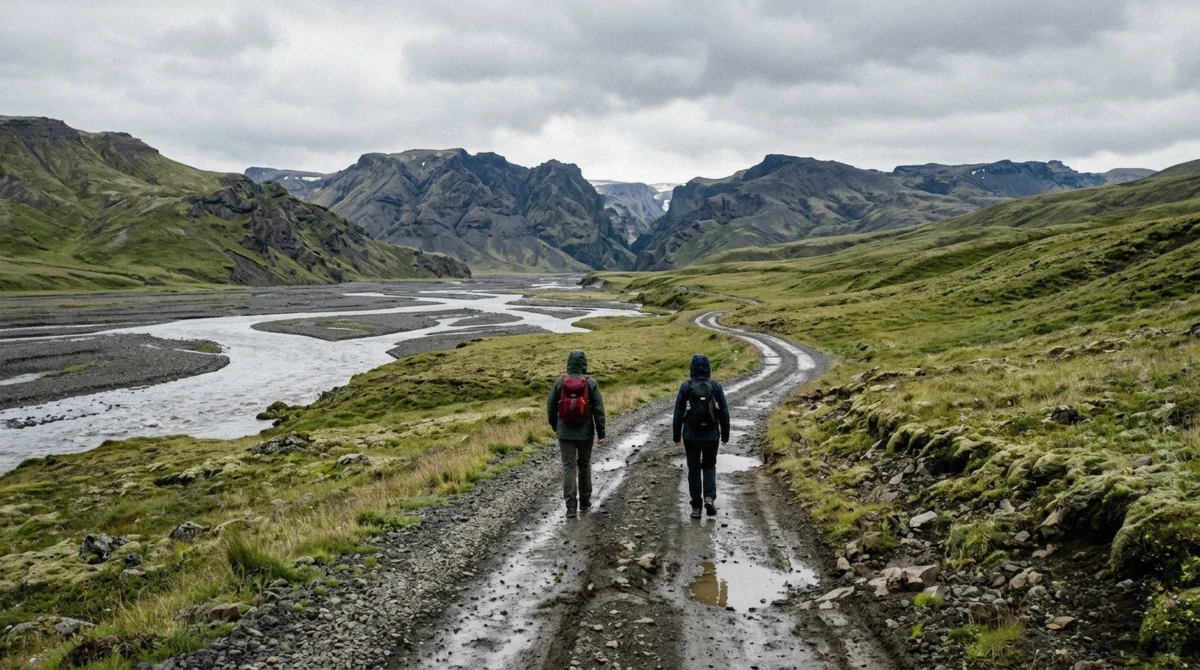
Shoes with grip, and boots if you are doing the 5 km walk into the canyon. The path is flat gravel for most of its length, then turns muddy at the descent, where water drips constantly off the basalt columns and makes the rock slippery. There are chains and ropes fixed to help you down that section, which tells you what the surface is like.
For the town, the west-side platform and the puffin boardwalks, ordinary walking shoes are enough. Nobody needs mountain boots for 245 metal steps.
What Each Trip Expects You to Bring
Operators list this on their booking pages and most people read it after they have packed. The differences are small and they matter.
| Trip | Must bring | Nice to have |
|---|---|---|
| Canyon by coach | Rain gear, comfortable shoes | Camera, snack |
| Canyon on foot | Hiking shoes, waterproofs, water, snacks | Walking poles, spare socks |
| Canyon plus the geothermal pools | Swimsuit, towel, all of the above | Flip-flops for the decking |
| Puffin colony | Warm layer, waterproof, comfortable shoes | Binoculars, a longer lens |
| Fjord cruise | Warm layers, windproof outer | Binoculars, seasickness tablets |
| The town on foot | Waterproof jacket | Nothing else |
Two items recur and neither is supplied. Swimsuits and towels cost 1,390 ISK each to hire at the pools, which adds up faster than packing them does. And binoculars are named by the boat operator specifically, because seals on rocks and birds on high ledges are the difference between a good trip and a great one.
The Packing List
For a single day out of the fjord, in the cruise season.
- Waterproof shell with a hood, taped seams, long cut
- Fleece or light down mid-layer, even in July
- Wool or synthetic base layer, never cotton
- Waterproof trousers if you are walking the canyon or taking the boat
- Shoes with grip; boots for the east-side canyon path
- Hat and thin gloves, which weigh nothing and get used more than you expect
- Swimsuit and towel if the geothermal pools are on your itinerary
- Binoculars for the colony and the boat
- Water and food for the whole trip, since nothing is sold at any stop
- A card for the toilets at the canyon car park and for the parking app
- A dry bag or a plastic bag for the camera
- Sunglasses, which sound absurd until the sun comes out at ten in the evening in June
What not to bother with
An umbrella, which the wind will destroy inside the hour. Heavy winter gear in July, which you will carry all day and never wear. Hiking poles for anything except the canyon walk.
And a change of clothes for a five-hour trip, which is weight for a scenario that a working shell prevents.
Packing by What You Booked
If you are staying in the town for a few hours
a waterproof jacket and walking shoes. That is genuinely it, and everything on the town walk sits within 0.3 km of the pier.
If you are on a coach to the canyon rim or the puffins
add the warm mid-layer and a hat. You are outside for an hour at a time in exposed places, not all day.
If you are walking into the canyon
boots, waterproof trousers, water and food. Five kilometres with no shelter, no toilet and nothing sold at either end.
If the geothermal pools are on your trip
swimsuit and towel in the daypack, or budget 1,390 ISK each at the desk. Flip-flops help on cold decking.
If you are travelling outside June, July or August
everything above plus proper gloves, and expect twice the rainfall. October is the wettest month of the year here.
Packing Questions
What should I wear in Iceland in summer?
Three layers with a waterproof shell on top. In East Iceland the July average high is 13°C, so summer here means a fleece and a rain jacket rather than shorts. The one thing that changes seasonally is how much of the mid-layer you need, not whether you need it.
Do I need hiking boots?
Only for the east-side walk into Stuðlagil Canyon, where the last section is muddy and the wet basalt is slippery enough that chains are fixed to help you down. For the town, the west-side viewing platform and the puffin boardwalks, ordinary shoes with grip are fine.
Are waterproof trousers overkill?
Not on the canyon walk or the boat. Five kilometres in horizontal rain with no shelter is exactly the case they exist for. For a town day or a coach trip with short stops, a long jacket covers you.
Do the tours provide towels for the geothermal pools?
No. Both trips that include admission list swimwear and towels as excluded, and hire at the desk costs 1,390 ISK for each. Packing them takes almost no space and saves the most annoying charge of the day.
How cold does it get on the boat?
Colder than the town by a wide margin, whatever the thermometer says on shore. The operator's own advice is warm layers and binoculars, and the fjord mouth is open to the Atlantic. Dress as though it were ten degrees cooler than where you boarded.
What about winter?
Everything above plus proper gloves and traction for ice. The cruise season ends in September, the guided trips stop, and the pass out of the town closes in storms, so a winter visit here is a driving trip rather than a tour day. The best time page covers what each month is actually like.
Is there anywhere to buy gear locally?
Not in Seyðisfjörður. Egilsstaðir, 27 km over the pass, has outdoor shops at Icelandic prices, which means a jacket bought in a hurry costs more than the same one at home and fits worse. Sort the shell and the boots before you fly and improvise on everything else.
What do I need for a day on the water?
More than you think. The three-hour fjord cruise runs out to the mouth where the Atlantic comes in, and it is markedly colder afloat than in the town. Windproof outer layer, hat, gloves, and something to keep spray off the camera. The operator names binoculars specifically and does not provide them, which tells you what the trip is for.
Hiring Rather Than Packing
Almost nothing here is available to rent, which is the opposite of how it works at a ski resort or a dive site. Plan on the basis that whatever you did not bring, you will do without.
| Item | Can you get it locally? | What it costs |
|---|---|---|
| Waterproof jacket | No rental in the town | Buy before you travel |
| Hiking boots | No | Bring them or take the rim tour instead |
| Towel at the geothermal pools | Yes, at the desk | 1,390 ISK |
| Swimsuit at the geothermal pools | Yes, at the desk | 1,390 ISK |
| Binoculars | No, and no operator lends them | Bring your own |
| Waterproof phone case | Occasionally in the shop | Small, if in stock |
Buying in Iceland
Outdoor clothing is sold in Egilsstaðir and at prices that reflect a small market in an expensive country. A shell bought in a hurry at the last shop before the pass will cost more than the same jacket at home and fit worse.
The practical version of this advice: the jacket and the boots are the two items to sort before you fly. Everything else on the comparison of Seydisfjordur tours can be worked around, but a five-hour coach trip in a jacket that wets through is a day you paid for and did not enjoy.